Choosing a new driveway involves more than selecting the colour or pattern that looks best in a photograph. The surface must suit the property, provide reliable parking and cope with regular exposure to rain, frost, vehicle traffic and changing temperatures. Homeowners also need to consider maintenance, drainage, design flexibility and how the finished driveway will complement the rest of the house.
Across Billingham, properties range from traditional homes around Old Billingham and Billingham Green to family housing in Low Grange, High Grange and Wolviston Court. Each frontage has its own dimensions, access arrangements and architectural character. The material that works well for one home may therefore be less suitable for another.
The Paving People provides professionally designed and installed driveways in Billingham, with options including block paving, resin bound surfacing, pattern imprinted concrete, tarmac and Indian sandstone. Understanding the differences between these materials is the first step towards making a confident decision.
What Should You Consider Before Choosing a Surface?
A driveway should be planned around how the space will be used. A household with several vehicles may prioritise strength, parking capacity and simple maintenance. Another homeowner may place greater emphasis on decorative patterns and a finish that complements a period property.
The size and shape of the frontage can also influence the choice. Individual paving blocks provide considerable flexibility around curves, steps and irregular boundaries, while resin and tarmac can create a cleaner appearance over larger areas. Pattern imprinted concrete offers numerous decorative designs while retaining the benefits of a continuous surface.
Drainage is another essential consideration. Water should not collect beside the house, flow uncontrolled onto the pavement or remain in depressions across the driveway. Existing levels, the position of drains and the permeability of the chosen construction all need to be assessed before work begins.
Maintenance preferences should be discussed as well. Every driveway benefits from routine cleaning, but some surfaces require occasional sanding, sealing or specialist treatment. Understanding this from the beginning makes it easier to select a material that fits the amount of maintenance you are prepared to undertake.
Block Paving for Traditional and Modern Properties
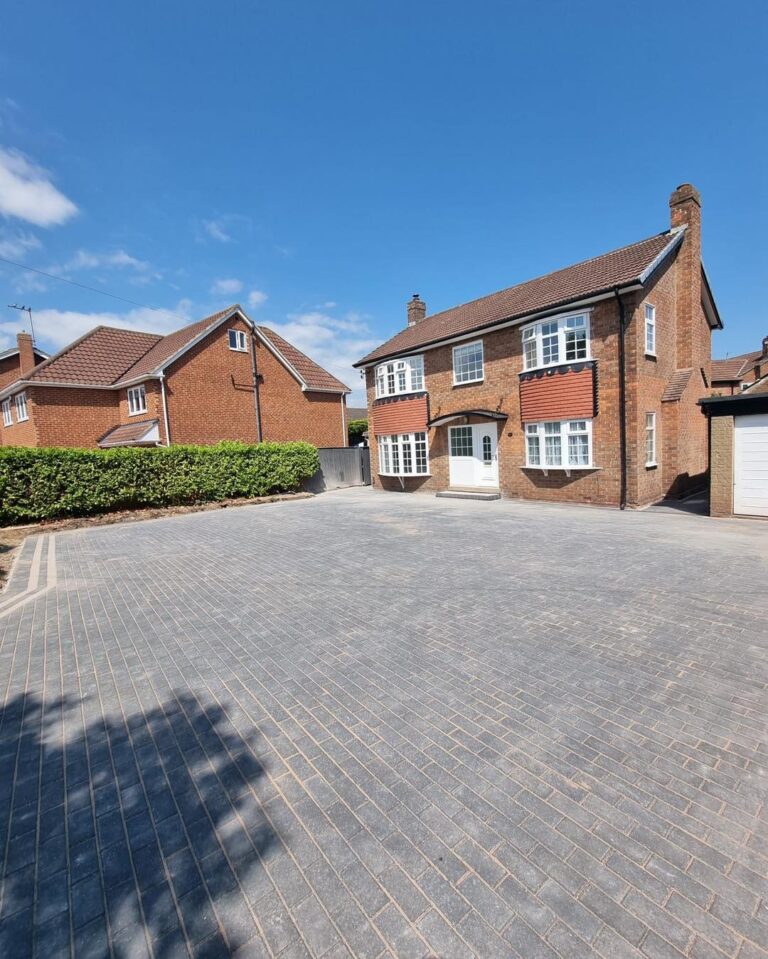
Block paving remains popular because it offers extensive design flexibility. Blocks are available in numerous colours, sizes, textures and shapes, making it possible to create anything from a traditional cobbled appearance to a clean contemporary layout.
Different laying patterns can be used to change the visual character of the driveway. Contrasting borders may define parking spaces or frame the main surface, while complementary blocks can connect the driveway with paths and entrances. This flexibility makes block paving suitable for many different properties throughout Billingham.
When laid on a properly prepared base with secure edge restraints, block paving can support regular vehicle use. Another useful advantage is that individual blocks can be lifted and replaced if a localised area becomes stained or damaged. Underground services can also be accessed without removing the entire driveway.
The joints will require occasional attention. Kiln-dried sand may need replenishing after cleaning, and organic growth should be removed before it becomes established. Professional installation and suitable drainage can reduce common problems such as movement, sinking and persistent weed growth.
Homeowners interested in this option can learn more about our block paving in Billingham.
Resin Bound Driveways for a Smooth Finish
Resin bound surfacing combines dried decorative aggregate with resin before the mixture is laid and hand finished. The result is a smooth surface without loose stones, available in a wide range of natural-looking colour blends.
This material can work particularly well beside modern homes, although warmer aggregate colours can also complement more traditional brickwork. Borders may be added to frame the installation or connect the driveway visually with existing features.
A correctly designed resin bound system can provide a permeable surface, allowing water to pass through the bound aggregate. However, the complete construction must be considered. Applying permeable resin over an unsuitable impermeable base does not automatically create an effective sustainable drainage system.
Resin bound driveways are relatively straightforward to maintain. Regular sweeping prevents leaves and dirt from accumulating, while periodic washing can remove surface grime. Because the aggregates are bound together, the surface does not scatter loose stone across paths or pavements.
Preparation remains essential. The resin must be supported by a stable and appropriate base, with cracks, movement and contamination addressed before installation. Mixing and laying should also be completed under suitable conditions by an experienced team.
Pattern Imprinted Concrete for Decorative Durability
Pattern imprinted concrete is created by placing a concrete surface, adding colour and applying textured mats before the material cures. This can reproduce the appearance of cobbles, slate, stone or individual paving while retaining a continuous construction.
The wide selection of colours and patterns makes it suitable for properties with very different architectural styles. Decorative borders and contrasting sections can be incorporated to define entrances or break up a larger frontage.
One of the main benefits is its resistance to weeds. Because the finished surface does not contain the same joints as conventional block paving, there are fewer spaces in which unwanted growth can become established. It also provides a strong, hard-wearing area for regular vehicle use when the base and concrete have been installed correctly.
Pattern imprinted concrete requires appropriate drainage and planned movement joints. It should also be resealed periodically to protect the colour and surface. The resealing interval will depend on exposure and use, so homeowners should follow the aftercare advice provided for their installation.
Our local service page contains further information about concrete imprint driveways in Billingham.
Tarmac for a Simple and Practical Driveway
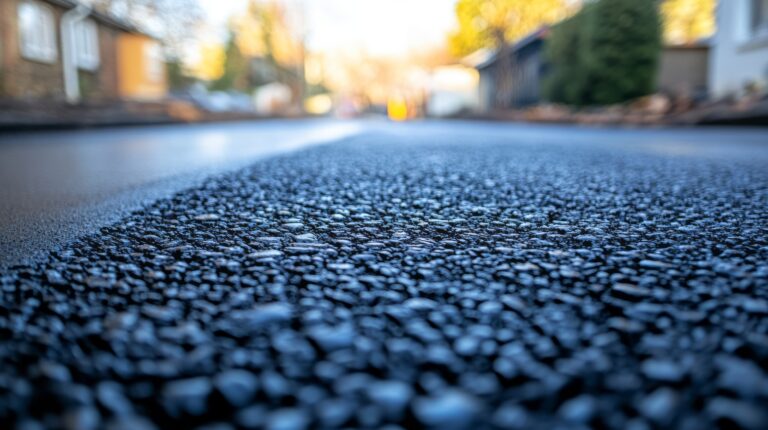
Tarmac is a practical option for homeowners who want a relatively understated driveway. Its smooth, uniform appearance can work well across large parking areas, and contrasting paving edges may be added when a more decorative finish is required.
The material is known for coping with regular vehicle traffic and can often be installed efficiently once the groundwork is complete. It is particularly effective where the homeowner wants functionality without an elaborate pattern.
Although tarmac is generally easy to maintain, it should still be kept clean and inspected for localised wear. Edges need adequate support, and the quality of the sub-base will significantly influence long-term performance.
The dark colour can create a strong contrast with lighter brickwork, rendered walls or pale block borders. For some homes, this simple combination provides a clean finish that does not compete with the architecture of the property.
Indian Sandstone and Other Natural Finishes
Natural stone can create a distinctive driveway with variations in colour, tone and texture. Indian sandstone is particularly well suited to homeowners who want a more traditional appearance or wish to coordinate their driveway with paths and garden areas.
The stone must be suitable for the intended application and laid using an appropriate construction method. Vehicle areas create different demands from patios and pedestrian paths, so slab thickness, foundations, jointing and edge support must all be considered.
Natural stone may require more careful cleaning than some manufactured materials. Harsh products or excessive pressure can affect the surface or jointing, making professional maintenance advice valuable.
Although it may not suit every budget or property, sandstone provides a characterful alternative to uniform manufactured surfaces.
Drainage and Planning Considerations
The surface material cannot be considered separately from drainage. The official Planning Portal guidance for paving a front garden explains that planning permission is generally not required when a new or replacement driveway uses permeable surfacing or directs water to a permeable area. Traditional impermeable surfaces covering more than five square metres may require permission where suitable drainage is not provided.
These are national guidelines for houses in England, and individual properties may be affected by additional restrictions. Flats, maisonettes, listed properties, planning conditions and areas with restricted permitted development rights may require different consideration. A new access or dropped kerb is also a separate matter that should be discussed with the relevant authority.
A professional site assessment will establish how water currently behaves and whether channels, drains, permeable construction or changes to the design are required.
Which Driveway Requires the Least Maintenance?
Maintenance requirements depend on the quality of the installation, surrounding conditions and how the driveway is used. Resin bound and pattern imprinted concrete are often selected by homeowners seeking surfaces with fewer joints and limited opportunities for weed growth.
Tarmac is also relatively simple to maintain, although its appearance may change as it ages. Block paving requires some joint maintenance but offers the significant benefit of being locally repairable. Natural stone may need more careful treatment to retain its appearance.
No driveway is entirely maintenance-free. Leaves, soil, algae, vehicle deposits and general dirt can affect any outdoor surface. Regular sweeping and appropriate cleaning will reduce build-up and make more intensive restoration less likely.
Choosing a Driveway That Complements Your Home
The best driveway should feel connected to the property. Colour is particularly important, as a surface that looks attractive in isolation may clash with the brickwork, roof or existing landscaping.
Traditional homes often suit warmer paving shades, cobbled patterns or natural stone. Contemporary properties may work well with grey resin blends, simple block layouts or tarmac framed by a clean contrasting border. These are not fixed rules, and a design visit provides an opportunity to compare physical samples beside the property.
The layout should also be practical. Parking spaces need sufficient room, paths should remain easy to use and access to doors, gates and bins must be considered. A visually impressive driveway that makes daily movement awkward has not been planned successfully.
Arrange a Billingham Driveway Design Visit
There is no single driveway material that is best for every Billingham home. Block paving provides extensive design flexibility, resin creates a smooth finish, pattern imprinted concrete combines decoration with a continuous surface and tarmac offers straightforward practicality. The right option is the one that suits your property, expected use, maintenance preferences and budget.
The Paving People can assess your frontage, explain the available materials and help you compare colours, patterns and finishing details. Visit our page covering driveways in Billingham and arrange a free design visit to start planning a driveway built around your home.